IS MONKEYPOX DANGEROUS?
dr. Erni Juwita Nelwan, Sp. PD- KPTI, Ph.D, FACP FINASIM
With
dr. Ivena dan dr. Aninda Dinar Widiantari
Definisi
Monkeypox virus is a zoonotic virus belonging to the genus Orthopoxvirus and the family Poxviridae. This virus was first isolated in 1958 in a group of sick monkeys (Macaca cynomolgus). Meanwhile in humans, this virus was first detected in 1970 in Africa, in a 9 year old child from Zaire.
Monkeypox transmission
The risk factor for transmission will increase in those who often carry out activities that come into close contact with animals, especially hunting, consuming and skinning bush meat and who are young.
Transmission can occur through animals infected with humans. Transmission can be through blood, body fluids and lesions in infectious animals. Gambian giant rats and squirrels are animals that often become virus reservoirs. Consuming meat from infected animals that is not fully cooked can be a risk factor for monkeypox transmission.
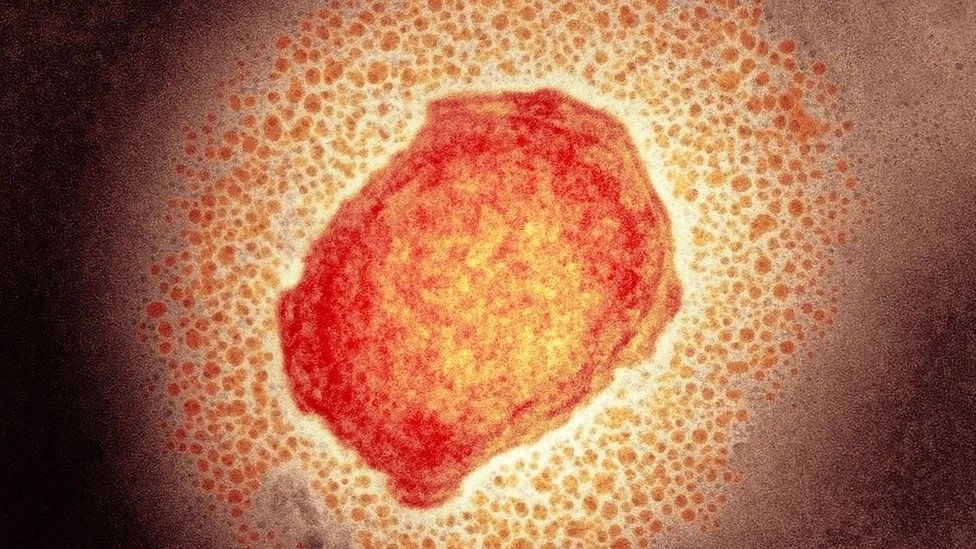
Monkeypox virus Particle
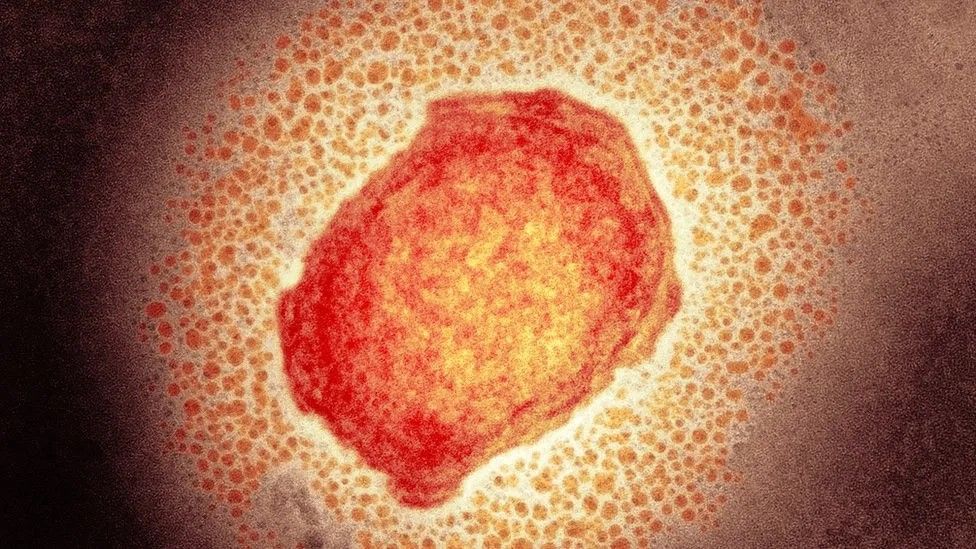
Source Picture www.bbc.com./news/health-45665821
Human-to-human transmission can occur through close contact with secretions from infected respiratory tract, skin lesions and objects contaminated with body fluids and patient lesions. Apart from that, transmission can also occur through droplet particles that can be exposed, for example when a patient and a friend are talking.
Clinical manifestations
Monkeypox complaints are almost like chicken pox, but the difference is that the complaints are generally milder and less infectious. The incubation period is about 12 days (can last 4-20 days)
Complaints begin with prodromal symptoms of viral infection, such as fever (38.5C-40C), chills, headache, myalgia, malaise, anorexia, pharyngitis, cough with or without sputum and back pain. This phase can last for 1-10 days. Lymphadenopathy can appear within 2-3 days after complaints of fever.
This will be followed by the eruption phase of maculopapular exanthema. The eruption is generally monomorphic, with a centrifugal distribution, then changes shape to become vesicular, pustular and finally becomes crusty within 2-3 weeks. This eruption will affect the entire body, including the scalp, extremities and face.
These complaints will generally disappear and improve on their own after 14-21 days. However, in some cases, it can become very severe, especially in children. The severity depends largely on the health condition, exposure to the virus and the severity of complications.
Monkeypox prevention
There is no specific vaccination for monkeypox. However, based on research conducted by the Center of Disease Control and Prevention (CDC), giving the chickenpox vaccine can actually help provide up to 85% protection against monkeypox infection. The vaccine can be given within 2 weeks (ideally 4 days) after exposure to sick animals or human cases of monkeypox. The efficacy of vaccination can apparently extend protection, even several years after vaccination and reduce the incidence of complications.
Bibliography:
- Pal M, Ramana K, Mengstie F. Epidemiology, Diagnosis, and Control of Monkeypox Disease: A comprehensive Review. American Journal of Infetious Disease and Microbiology. 2017 (5): 94-99
- Reynolds MG, Doty JB, McCollum AM, Olson VA, Yoshinori Nakazawa. Monkeypox re-emergence in Africa: a call to expand the concept and practice of One Health. Expert Rev Anti Infect Ther. 2019 February ; 17(2): -129-39.doi:10.1080/14787210.2019.1567330
- Brown K, Leggat PA. Human Monkeypox: Current State of Knowledge and Implications for the Future. rop. Med. Infect. Dis. 2016,1, 8; doi:10.3390/tropicalmed1010008 www.mdpi.com/journal/tropicalmed
- Monkeypox Virus. In: Fenner F, Wittek R, Dumbell KR. The Orthopoxvirus. 1989. San Diego : Academic Press. P.227-67
WHO. Monkeypox. June 2018. Available at : https://www.who.int/en/news-room/fact-sheets/detail/monkeypox